

India’s Energy Transition and Innovation Collaboration
The global coal power generation nearly doubled during 2005–20, fuelled by the increasing demand for power from developed and developing economies. China, India, the US and Japan are the world’s largest coal power generating and consuming countries, accounting for a share of about 75% in the global total. There are about 8,500 coal-based power plants worldwide with an installed capacity of more than 2,000 Gigawatts (GW). With increasing greenhouse gases and coal power plants contributing to about one-fifth of these emissions, the world has started turning to renewable and sustainable power generation solutions.
India, with a large population and growing economy is the fifth most polluted country in the world. Coal and traditional power generation account for a large share in this pollution. The country mainly relies on fossil-fuel-based power generation, and more than 59% of its total installed capacity comes from coal, lignite, gas and diesel sources. The total installed capacity of India is 400 GW.
Growth of renewable energy in India
As a step toward growth, India started allowing private power generation from 2003. This enabled private investors to set up power plants in the country, making it a popular energy investment destination. The country eased the norms for foreign investment in power and renewable energy. This led to growth in the participation of global players in Indian non-conventional energy projects and large-scale foreign direct investment (FDI) inflow.
Growth of wind energy in India
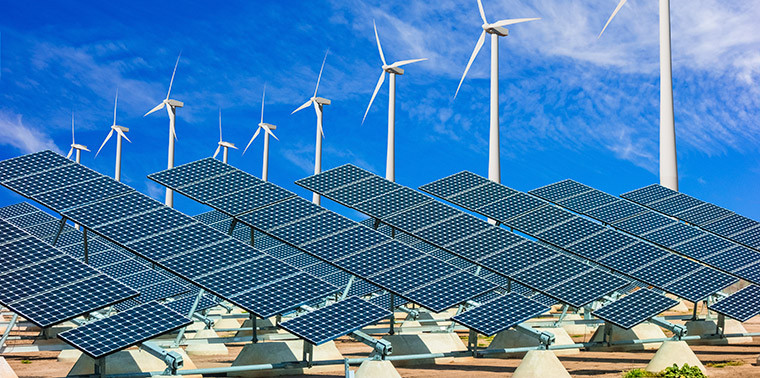
Until 2000, India had a cumulative wind power generation capacity of 1.17 GW. Since then, renewable energy in India has grown rapidly. The total wind power capacity in the country increased at a CAGR of 17.5% to 40.4 GW in March 2022 from that in 2000.
Leave a Comment